Saturday, December 13, 2014

Samurai: Japanese Armor from the Ann and Gabriel Barbier-Mueller Collection


A fascinating Southern California premiere covering 7 centuries of battle gear worn by the Samurai is currently on view at LACMA, from the Ann and Gabriel Barbier-Mueller Collection.

Spanning from the 12th through the 19th centuries, the exhibit illuminates the life, culture and pageantry of the samurai warriors marking the evolution of both the functional and visually sumptuous Samurai accoutrements through the centuries.

Meaning “to serve by one's side”, the samurai class existed from the year 792 until its dissolution in 1868 during the Meiji Restoration. Starting as combat gear for equestrian archers, it evolved into full scale infantry and cavalry armies equipped with spears, swords and matchlock guns. After Tokugawa shogunate's 1615 ushering of an era of peace, the arms and armor became ornamental ceremonial gear symbolizing the ancestral battlefield valor, rank, income, prestige and the elite heritage of samurai families.

Showcased are over 140 pieces of armor, helmets, handheld weapons and horse-clad armors. Worn by senior warriors and feudal provincial governors, the elaborate suits of armor, helmets and face guards were made of iron, leather and precious as well as semi-precious metals weighing a total of 20 to 45 lbs, very light when compared to European or Persian armor. The well displayed exhibit includes an impressive, life-size presentation of charging samurai horsemen at the entrance of the exhibit.

Highlights include the Armor of the Tatehagidō Type shown with horse armor, a horse mask and horse tack symbolizing the prestige and power of their owners during ceremonies that paid tribute to high ranking leaders or marked special occasions. Before the 17th century samurai horses did not wear armor. Also featured are exquisitely decorated helmets, such as the Flame Helmet representing the Flaming Jewel.

The Armor of the Okegawadō Type is one of three suits of armor in the exhibition that illustrate how armor became increasingly decorative during the 250 years of peace that marked the end of samurai dominance.

Comprised of LAMCA holdings and local loan collections, the Art of the Samurai: Swords, Paintings, Prints and Textiles complements the Japanese Armor exhibit. Highlights include the Battle of Ichinotani and Battles of Dan-no-ura and Yashima, a 17th century six panel screen depicting historic battles. Also featured is one of the finest examples of masculine samurai calligraphy, the Snow, Moon, Flower Calligraphy, a set of three hanging scrolls made by a leading member of the Tokugawa Shogun family.


The Samurai Japanese Armor exhibit runs through
February1, 2015, at the Resnick Pavilion. The Art of the Samurai runs through March 1, 2015, at the Pavilion for Japanese Art, 5909 Wilshire Boulevard, Los Angeles, CA 90036. For more information call (323) 857-6000 or visit http://www.lacma.org/

Sunday, September 21, 2014

HAUNTED SCREENS: GERMAN CINEMA IN THE 1920's


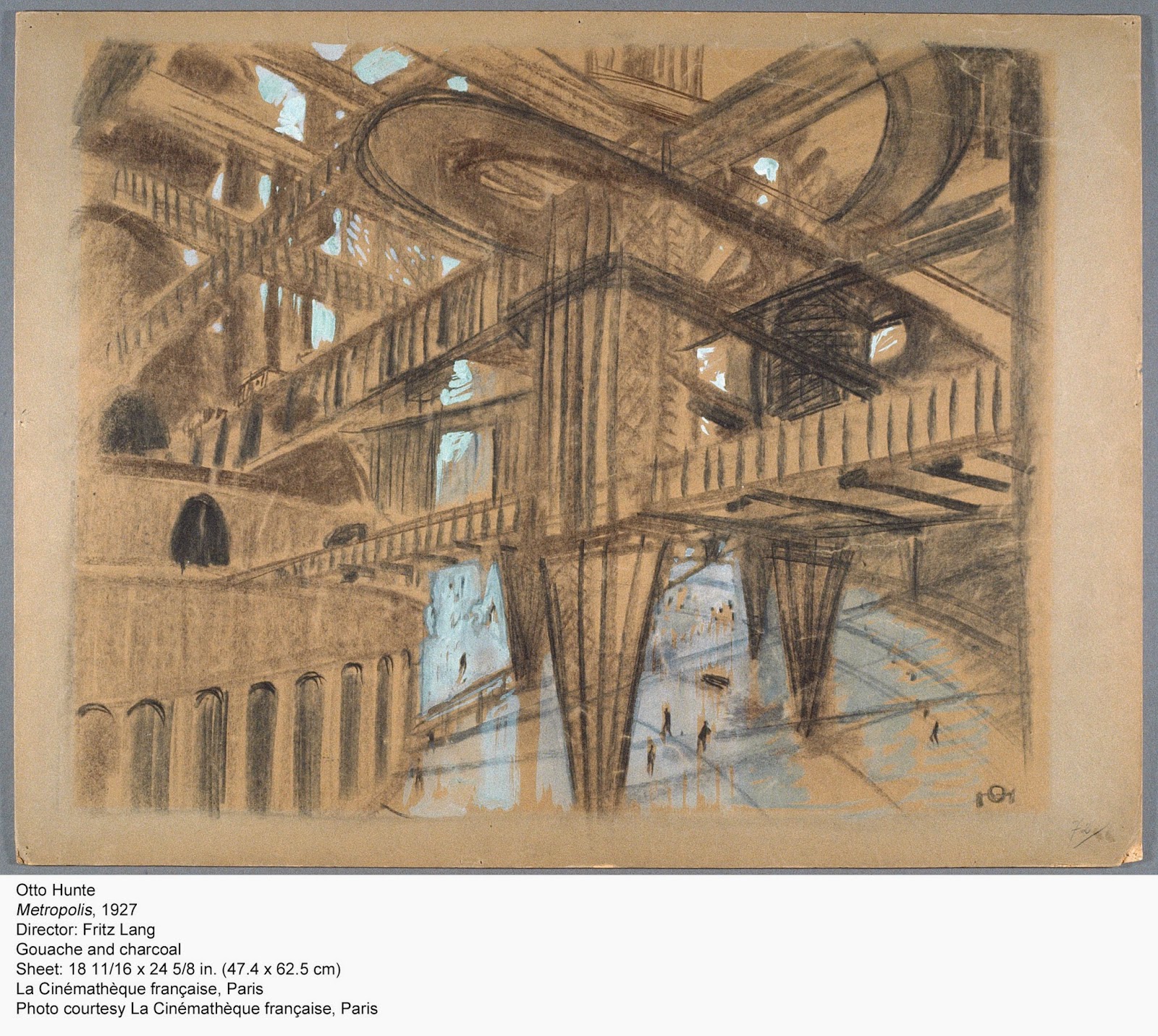
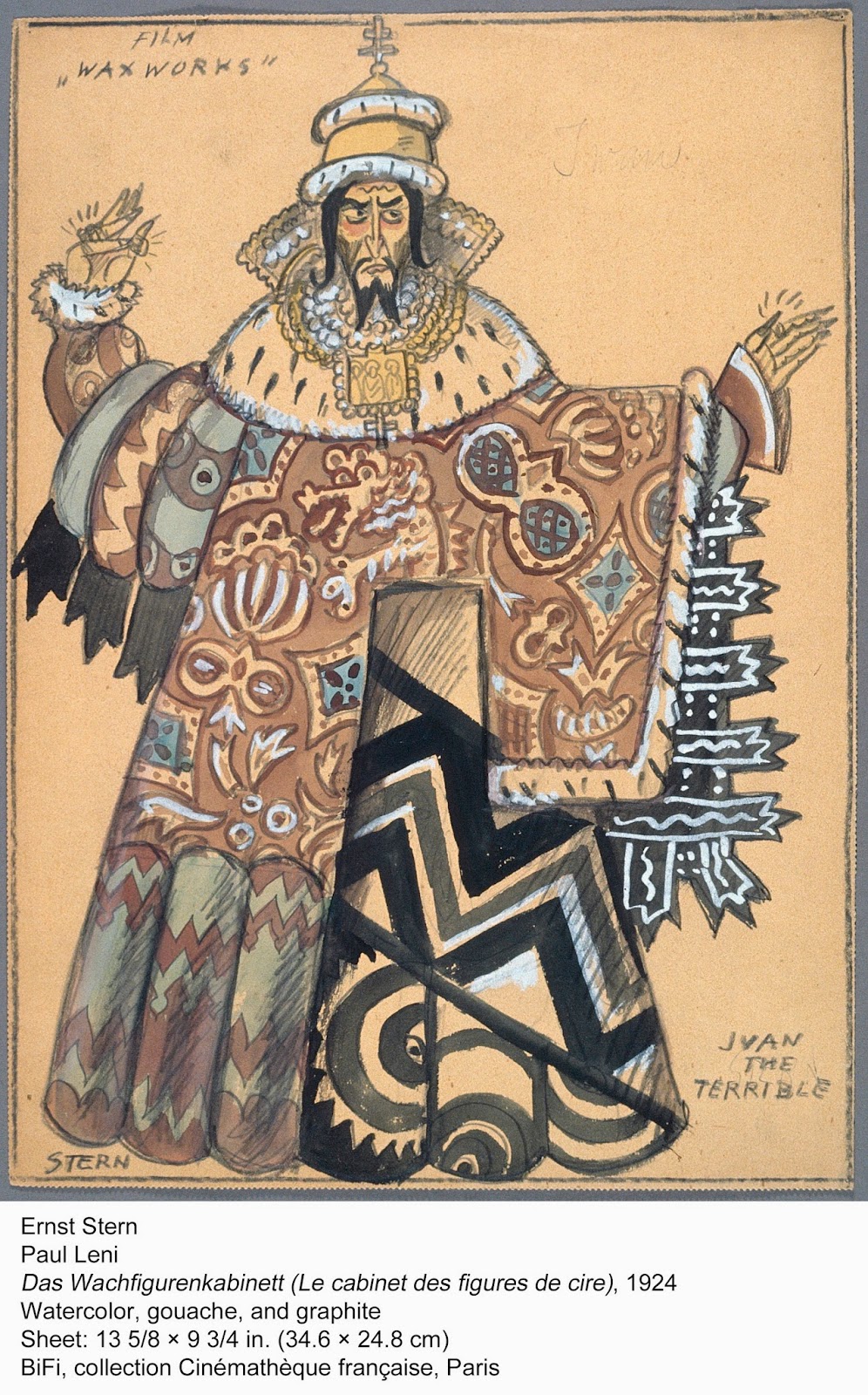
Expressionism emerged in German art, literature and theater, in the years preceding WWI. It resurfaced in silent cinema in the 1920's, distinguishing German film in the international marketplace with its hallmarks of chiaroscuro lighting, elaborately fabricated sets and angular graphics producing a mood of unease and paranoia. While only a small percentage of the approximately 3,000 films produced in Germany during the Weimar Republic can be considered Expressionist, the depiction of the unreal in German cinema was a catalyst in shaping the future evolution of camera technology and special effects, giving rise to genres such as film noir, science fiction and horror.
The exhibit at the Los Angeles County Museum of Art (LACMA) displays film clip sequences revealing the brilliant guiding vision of direction such as that of Fritz Lang, Friedrich W. Murnau, Georg W. Pabst and Robert Wiene, among others. Numerous vintage photographs and working drawings document the impressive artistic skill of their collaborators. Included is a segment dedicated to period colorful film posters used to expand film culture.

On view are nearly 250 objects representing cameras, 25 films, 20 artists, and 14 directors. Most of the featured films are silent with sound added during screening, ranging from full orchestras in larger cinemas to a pianist or organist in smaller venues. The technology for “talkies” was presented in 1919, with the first German feature in 1929: Walter Ruttmann's Berlin: Symphony of a Great City.

Commenting on the rise of technology in modern life is the emergence of a new style known as New Objectivity in which nominal realism was
used such as the feature Metropolis (1927), a triumph of camera work.


Lang, along with many directors and artists whose works are featured in LACMA's exhibition were forced to emigrate in 1933. This mass exile brought an end to Expressionist cinema in Germany while facilitating its dissemination and evolution worldwide.

Materials survive due to efforts of Lotte Eisner, a German film historian who immigrated to Paris in 1933 and persuaded many former compatriots to donate archives to La Cinémathèque Française.


The exhibit runs from September 21, 2014 through April 26, 2015, at the Los Angeles County Museum of Art (LACMA), at the Art ofthe Americas building, ground floor, located at 5905 Wilshire Boulevard, Los Angeles, CA 90036. For more information call (323) 857-6000 or visit http://www.lacma.org/

The exhibition was organized by the Los Angeles County Museum of Art, in collaboration with La Cinémathèque Française. In Los Angeles, Haunted Screens: German Cinema in the 1920s is presented by the Los Angeles County Museum of Art in association with the Academy of Motion Picture Arts and Sciences and is generously supported by the Leonardo DiCaprio Foundation and Riza Aziz.

Force Majeure


In Sweden's entry for the Oscars, Force Majeure, director Ruben Östlund explores man's psyche, exposing his fragility and contradictions in this brilliant dark comedy and gripping drama in which a Swedish family in search for family time vacations at a French Alps ski resort. During an avalanche warning, the husband Tomas (Johannes Kuhnke) runs away, leaving his wife Ebba (Lisa Loven Kongsli) daughter Vera (Clara Wettergren), and son Harry (Vincent Wettergren) to fend for themselves. The avalanche turn out to be a close call, but the ramifications of Tomas' action creates a family implosion.

Aided by the elegant cinematography by Fredrik Wenzel, the outstanding, natural feel of the intricate characters and the amusing arguments that ensue create the hilarious, yet reflective spirit of the feature. 

Saturday, September 20, 2014

Advanced Style


In a world celebrating youth fashion, images showcasing vibrant, active, glamorous older women are not often portrayed. In her latest documentary, director Lina Plioplyte portrays the beauty of such interesting and inspiring women, ranging in age from 62 to 95, featured in the popular Advanced Style blog created by New York fashion photographer Ari Seth Cohen.

True to Advanced Style's motto, a lady in her golden years never goes out of fashion, these models walk the streets of New York with flamboyant hats and accessories. Hilarious and endearing, Plioplyte's interviews reveal their individuality, their natural habitat, and how staying en vogue keeps them young.

Friday, September 19, 2014

The Guest


Regular collaborators, director Adam Wingard and screenwriter Simon Barrett excel in all fronts, interwinding chilling suspense and humor with sharp dialogue, in their latest low budget 80's style thriller inspired by Halloween.

With the exception of numerous unexpected twists, there is nothing unusual about the plot. What makes the feature special is the gradually increasing intensity and prolongation of the lingering sense of dread and violence with controlled energy and measured tension.

Grounding the feature is the complex centerpiece performance by Dan Stevens as the charming Adam, who ingratiated himself at the parent's house of his deceased soldier friend. Steven's performance deserves attention.

The Guest is poised for a cult following and a sequel.

The Skeleton Twins


When estranged siblings Maggie (Kristen Wiig) and Milo (Bill Hader) reunite, their apparently stable and happy lives turns out to be a facade covering old wounds. Their newly rediscovered bond gives rise to an understanding only siblings can share.

The powerful performance of Saturday Night Live stars Kristen Wiig and Bill Hader is the highlight of Skeleton Twins. Their chemistry and convincing interpretation of the main characters is emotionally engaging, elevating writer director Craig Johnson's latest comedy drama out of mediocrity.

Wednesday, July 23, 2014

Expressionism in Germany and France: From Van Gogh to Kandinsky


“Warning! A collection of paintings by the ...obscure painter Paul Gauguin... is advancing slowly towards Berlin. Following on the idiot Van Gogh comes now – Gauguin.”
Art critic of Die Kunst-Halle (1905).

Digressing from traditional pictorial images displaying a likeness of reality, the newly emerging Impressionist art of the late 19th century favored the use of dramatically expressive colors and brushworks depicting the artist's individual perceptions and feelings.

Rather than presenting expressionism as the traditional genre style, Los Angeles County Museum of Art's (LACMA) latest exhibit, Expressionism in Germany and France: From Van Gogh to Kandinsky, sheds new light on key developments in the early 20th century that gave rise to an international visual arts dialogue. In response to works of such modern masters as Van Gogh, Cézanne and Gauguin, new aesthetic approaches were generated, leading to the evolution of expressionism from Brücke and Gauvers through cubism and the Blaue Reiter group's abstraction, until the outbreak of war in 1914.

Organized chronologically and geographically, Expressionism in Germany and France: From Van Gogh to Kandinsky showcases an impressive collection of domestic and international loans spanning over 40 artists, represented in over 90 paintings, 45 works on paper and approximately 30 ephemera objects, including the works of Wassily Kansianky, Emil Nolde, Gabrielle Münter, Franz Marc, Henri Matisse, Robert Delaunay, and Pierre Bonnard.

Ranging from 1870 to 1914, significant works encompass, among others, the Wheatfield with Reaper displayed at Van Gogh's first exhibition in Germany in 1901, Pierre Bonnard's Mirror in the Green Room (1908) and Van Gogh's the Poplars at Saint-Rémy (1889).

The exhibit runs through September 14, 2014, at the Los Angeles County Museum of Art (LACMA), at Resnick Pavilion, located at 5905 Wilshire Boulevard, Los Angeles, CA 90036. For more information call (323) 857-6000 or visit http://www.lacma.org/